
Bare-root trees
Updated: Apr 12
Why bare-root?
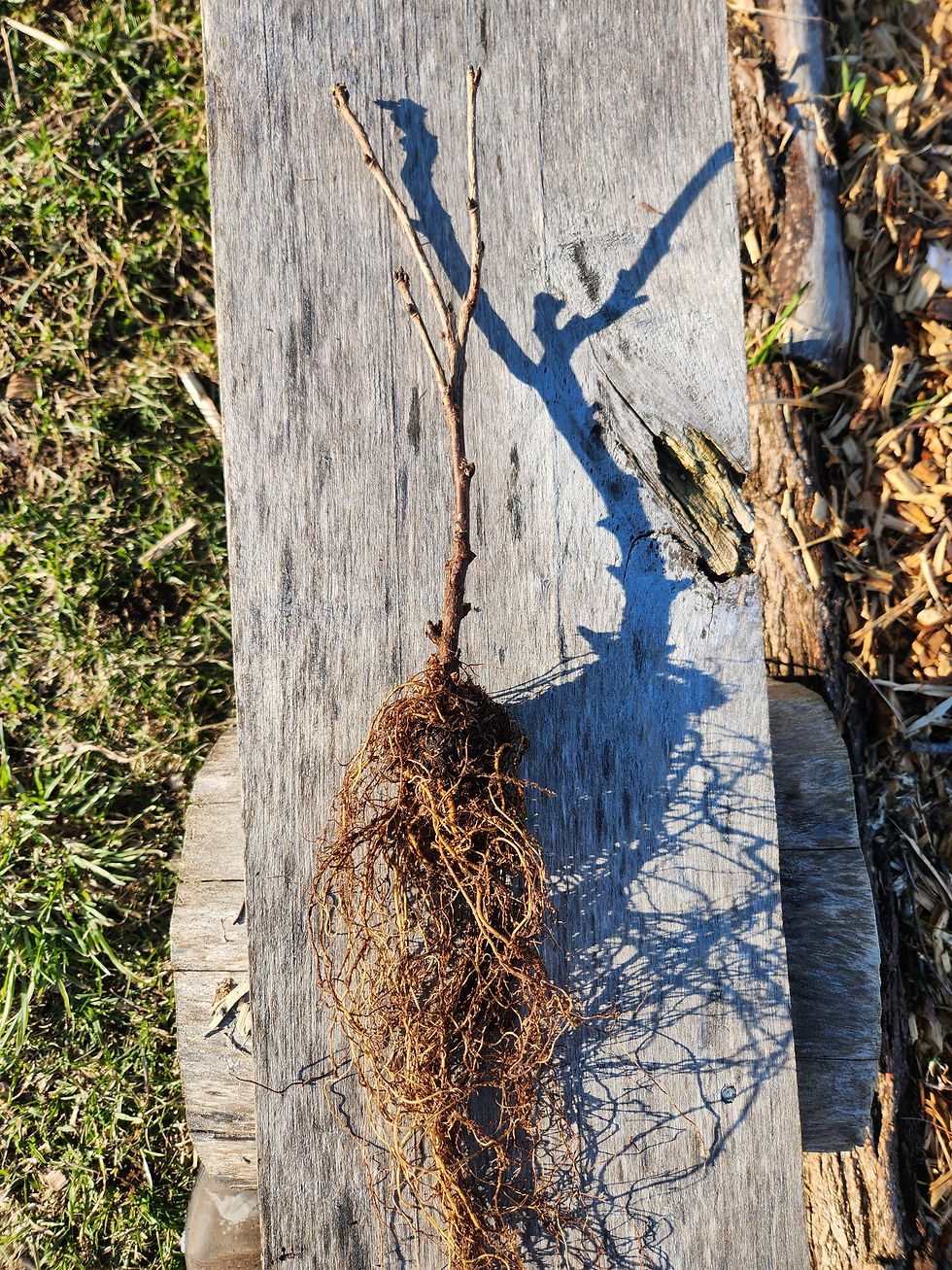
We choose to plant and supply bare-root trees because it is better for the long-term health of trees, and therefore better for the people growing them. When trees are grown in pots their roots quickly reach the edges of the pot and begin to grow in the shape of the pot. There tends to be a higher ratio of root growth to above ground growth, so even small potted trees can quickly become root-bound in a pot. The transplant shock can be greater for a potted tree and as the tree grows it is likely the roots growing in the shape of the pot will continue growing in that shape. In the long run this can having a girdling effect on the tree, giving it a much shorter life span. Even if not killing the tree, the primary roots may be restricted in how far they can reach or expend much more energy to branch off in a new direction.
In contrast, trees grown in a nursery bed can stretch their roots in any direction they please. The roots are in contact with a thriving soil ecosystem with a diverse range of nutrients and minerals, compared to the (at-best) mediocre soil in a pot. The trees are dug up carefully, keeping as much of the root system intact as possible. This root system will be branching in a way unique to the species of tree as well as the individual. When you transplant this tree in its new home, it will already be growing the way that is natural to it, and not dictated by a restrictive pot.
It is best to dig bare-root trees up and transplant them as a first or second year tree. They may look like small, but the trees really excel once transplanted and settled in to their new home.
An additional benefit of bare-root trees is less plastic used, as no pots are required. Another is less water usage. It is much easier to keep nursery beds moist than pot, which dry out very quickly, especially in the hot summer months.
There are times when having potted trees is useful, but we prefer to primarily offer bare-root trees.
So what does it mean to order bare-root trees from us?
Bare-root trees are dug and sold when the trees are dormant. This means there are no leaves on the tree and no active above ground growth happening, the energy is in the roots. You can think of it as the tree being sleeping. There is a small window for bare-root tree sales to happen. After the ground thaws but before the leaves pop in the spring, or after the leaves fall and before the ground freezes in the fall. This means that we will have 2 main order dates. You are able to place your order anytime in the year orders are open, but we will dig up trees and fulfil the orders in April and late October to mid November. Maybe you are doing some winter planning and have the inspiration to order some trees you want to put in the ground in the spring. That’s great! We will send them your way when the time is right, giving these trees the best chance to thrive. Several options for delivery/pick-up/shipping dates will be offered after your order is confirmed, and we will do our best to accommodate special requests. Order early to access our full selection of trees, certain species are sure to sell out fast.
Bare-root trees are generally younger than those sold in pots, but they tend to be more affordable and easier to transport. Without having to account for the cost of soil, pots and the weight of transport, it is possible to transport hundreds of trees very easily.
A young bare-root tree will catch up and surpass in growth a slightly older potted or root-balled tree planted at the same time, and be healthier in the long run if grown in comparable conditions.
It is important to transplant your trees as soon as possible after receiving them. The roots should stay damp, but not soggy and be planted as soon as possible, ideally within two or three days. Keep your new trees some where cool, above freezing and out of direct sunlight.
Changing our expectations
It seemed surreal the first time I received an order of 30 bare-root trees in the mail. I didn't know quite what I was looking at when I got the delivery. A bundle of sticks protruding from a bag of sawdust. Is this really what we just spent hundreds of dollars on? There was a time where this was new to me too. Now after a few years of planting and working with bare-root trees that other nurseries have supplied me, it is the only way I want to propagate trees. It is the new normal and what a pleasure it is, tending to these trees and watching them thrive.
I have been reading Trees of Power by Akiva Silver, and this quote really stood out to me, he worded it so well (I highly recommend this book for anyone interested in growing food through planting trees).
“Planting trees within the timing of when they are dormant is not as convenient, but it is far better for the trees. They experience very little transplant shock, and when spring arrives in full force, they hit the ground running.
A hundred years ago no one sold trees in pots, but people still exchanged and transplanted lots of fruit, nut and ornamental trees. They even shipped these plants around the world. This was all done during the right time of the year for the trees—while they were sleeping. I encouraged gardeners to return to a simpler method of obtaining trees, one that does not require plastic pots and potting soils being trucked around, and one that leaves our soils and waterways healthy.”
-Akiva Silver in Trees of Power
To conclude
This is why we lean towards bare-root. It is gentler on the tree, a better start for their life and uses much less energy and inputs, which we love. It simplifies planting a tree... that's what it should be: simple.


Comments